
LYNDEN
PuraVida Post 18

“My name is Amsa. I’m 17 years old, and I was adopted from Ethiopia by a White family. I’ve experienced racism growing up in Lynden.” (Amsa Burke)
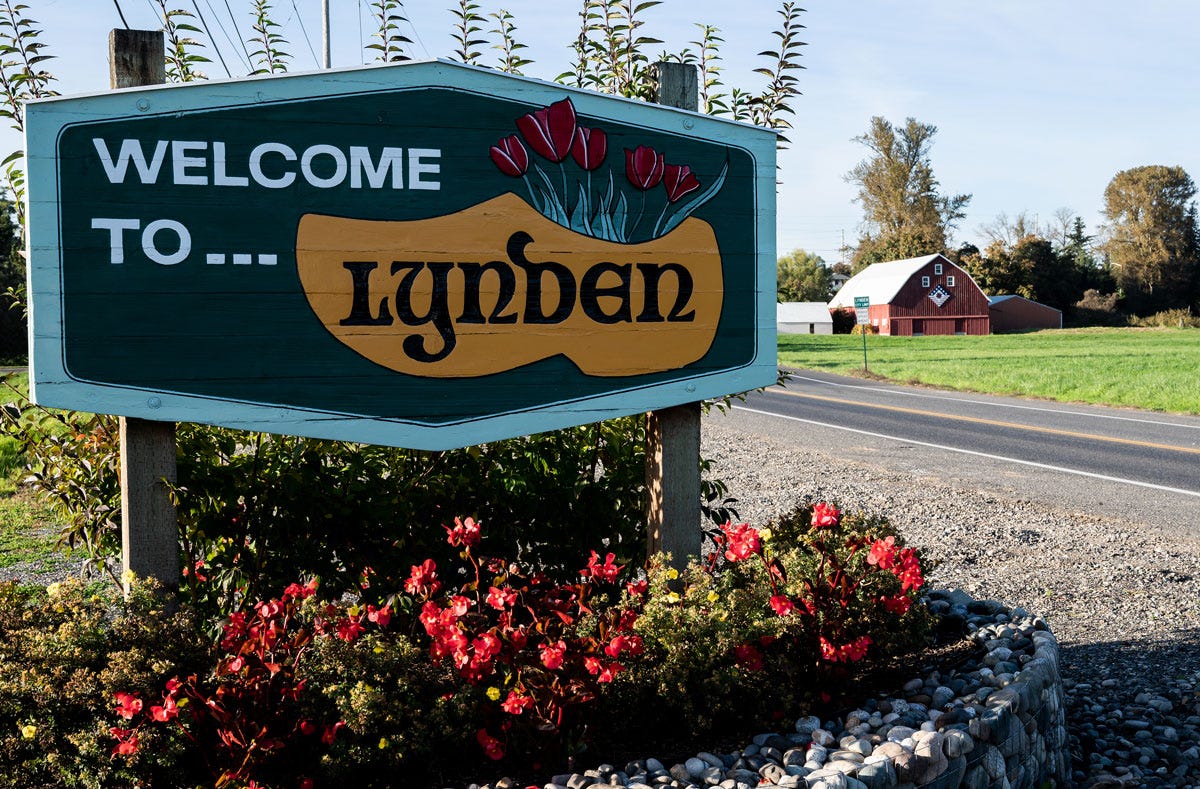
The small northwest Washington town of Lynden, about five miles south of the Canadian border, exudes religious faith, American patriotism, and a parochial, small-town feel. Founded by Phoebe Judson in the 1870s, Lynden was incorporated as a city in 1891. Dutch immigration in the early 1900s gave the community its enduring identity; architecture, businesses, place names, and the predominance of fundamentalist religious churches reflect the overwhelming conservative Dutch influence. In May 2016, for the first time in history, a presumptive presidential nominee of a major political party visited the small city of 16,000. The nominee was the Republican candidate.
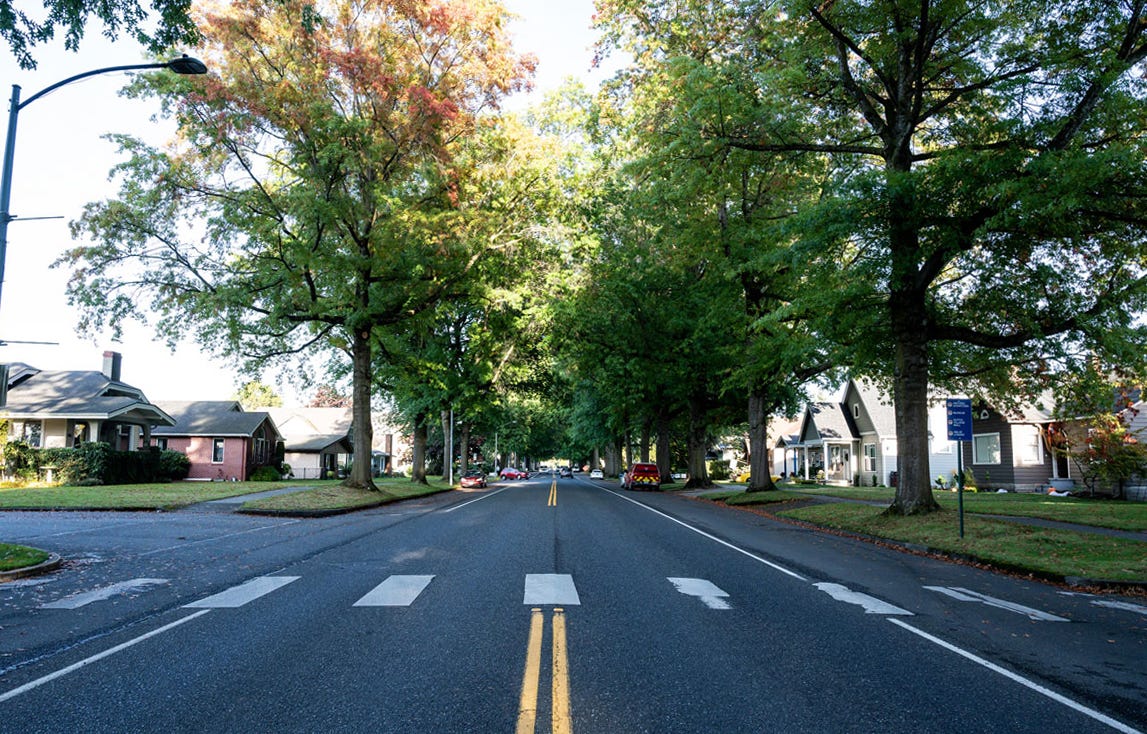
On the surface, Lynden seems like a nice place to live and it is in many ways. Sitting in the shadow of 10,781 foot Komo Kulshan (Mt. Baker), it supports a thriving agricultural and dairy industry. Its streets are clean, the lawns well-manicured, the people friendly. But the politics of the last decade has revealed a community grappling with racism, bigotry, prejudice, and fear. In fact, Lynden has struggled with the existence of that hate for nearly a century.
To be perfectly plain, though. Lynden is a white community.
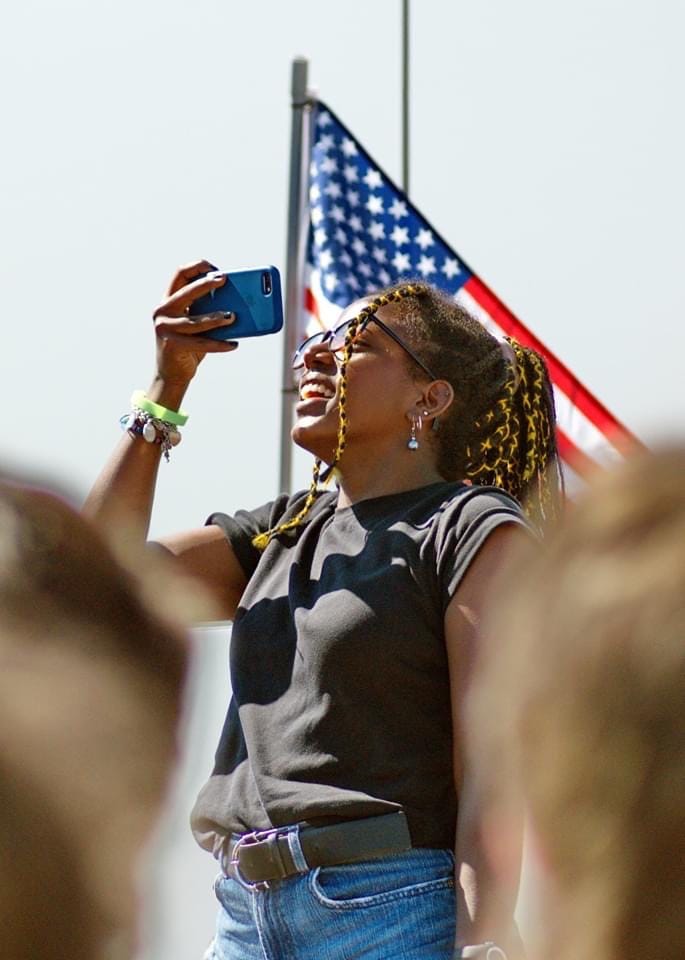
The documentary film, LYNDEN, released in summer 2024, is a powerful statement on how fragile is our right as citizens to speak our minds, to assemble peaceably, and petition our institutional leaders. LYNDEN tells the story of Amsa Burke’s senior year in the town’s one high school and who, in July 2020, helped organize its first racial justice march. Spurred by the killing of George Floyd by a white police officer, and the emergence of the Black Lives Matter movement, the intention of the marchers was to initiate a community discussion regarding race and the structural issues surrounding racism in Lynden.
“I was very proud of our team for putting everything together in a week, and was happily surprised [at] the turnout. But seeing the counter-protesters was discouraging.” (Amsa Burke)
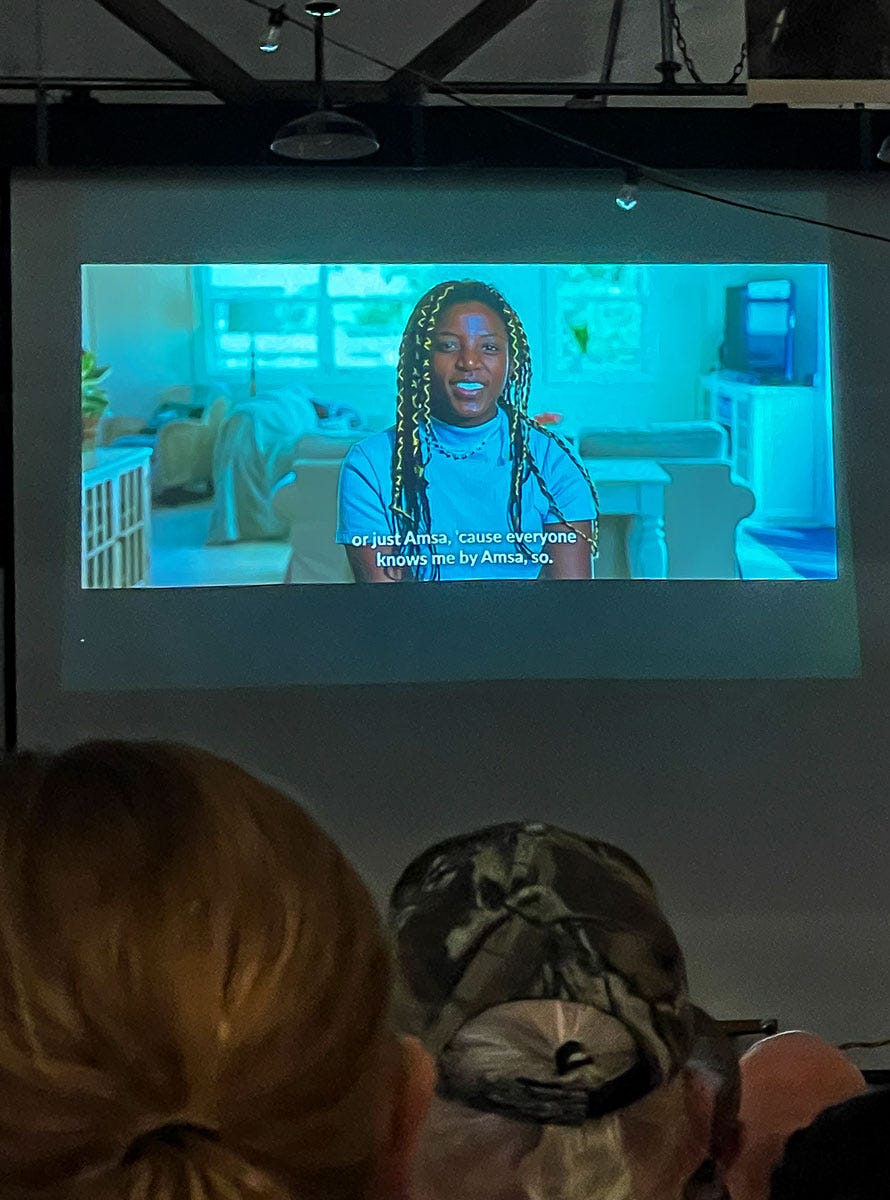
Growing up in Lynden, Amsa was in a unique, and precarious, position. Born and raised in Ethiopia for the first six years of her life, she was adopted by Lynden couple, Roger and Linda Burke, after Amsa’s birth mother died and her Ethiopian father could no longer provide adequate care. The film relates Amsa’s story in a touching, poignant manner: the separation from her homeland and father to the loving home in Lynden in which she grew up. In a full circle scene, we watch as Amsa and the Burkes return to Ethiopia where she briefly, and joyfully, reunites with her birth father.
As thoughtfully described in Clay Libolt’s review of LYNDEN in the Peripatetic Pastor, “Along with the complexity of such adoptions, into Amsa’s life comes all the complexities of being black in Lynden—well, in Lynden and in America.” Amsa describes the odd feeling of growing up as if she were “white with black skin.” Isolated yet disturbing school incidents (a classmate saying her sister hates Amsa because she is Black, or another student saying in years past you would have been my slave) compound the bizarre sensation of appearing one way while feeling another.
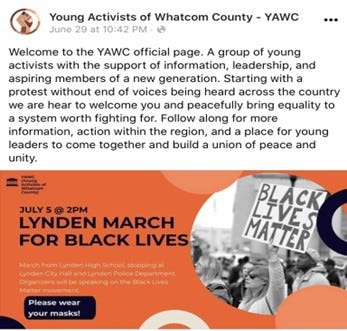
Lynden church leaders, conservatives, and MAGA followers quickly organized a counter protest in response to the racial justice march. Fearful that those demonstrating for human rights, equality, and peace, might cause trouble (defacing monuments, burning businesses) the counter protesters arrived with smoke-belching trucks, signs, MAGA flags. And guns.
Lines were drawn.
“As the riots and protests have escalated these past few weeks, I have been wanting to share my voice. I think one thing that is important to understand is that racism happens everywhere, even in a small ‘Christian’ town. I have experienced it myself, but I have shrugged it off, or put it to the side because I am afraid of causing conflict, or people not understanding that what they say actually affects me. As I have had time over the years to mature and rethink over the instances, I have become aware to the fact that I shouldn’t be so complacent. Ever since I have come to Lynden, being black has been really hard. I have felt isolated and lonely and unheard.” (Amsa Burke)
I’ve written before about my own struggles with innate prejudice and racism that surfaced on a trip to Africa a few years ago. Acknowledging the role White Americans played in maintaining a systemically segregated country and promoting discrimination of those who look or act differently is a subconscious weight I’ll never fully shed no matter how hard I try. Carrying the burden of my country’s past as well as an underlying white guilt shadowed my view of our Tanzanian and South African hosts. Those same uncomfortable, confusing feelings I experienced in Africa came up again at the LYNDEN screenings.
LYNDEN is a straightforward documentary, objectively portraying each side in the conflict and leaving the viewer with the impression that “this was all just one big misunderstanding.” If the town’s conservatives and church leaders had only realized that the planned march was organized by high school kids to open a discussion about race, that there was no threat to businesses or monuments, and that the march would be peaceful, then perhaps they would have even supported it, or at least its central message of peace, love, and understanding (what’s so funny about that, anyway?).
Given the context of when and why the march was conceived, shortly after George Floyd’s murder, Seattle’s Capitol Hill Occupied Protest (CHOP), and the overriding Covid-19 panic blanketing the nation, Lynden, like the entire country, was completely on edge. The imagined threat from Black Lives Matter (BLM) and Antifa was enough to spark fear into many of the town’s residents.
And there was a General Election looming mere months away.
“It caused a little conflict between the two sides. The counter-protesters thought we were going to riot and I was surprised that they didn’t back down after they saw that it was peaceful. It was both very saddening to see, but also made people aware that they need to start these conversations with people so others can understand as well.” (Amsa Burke)
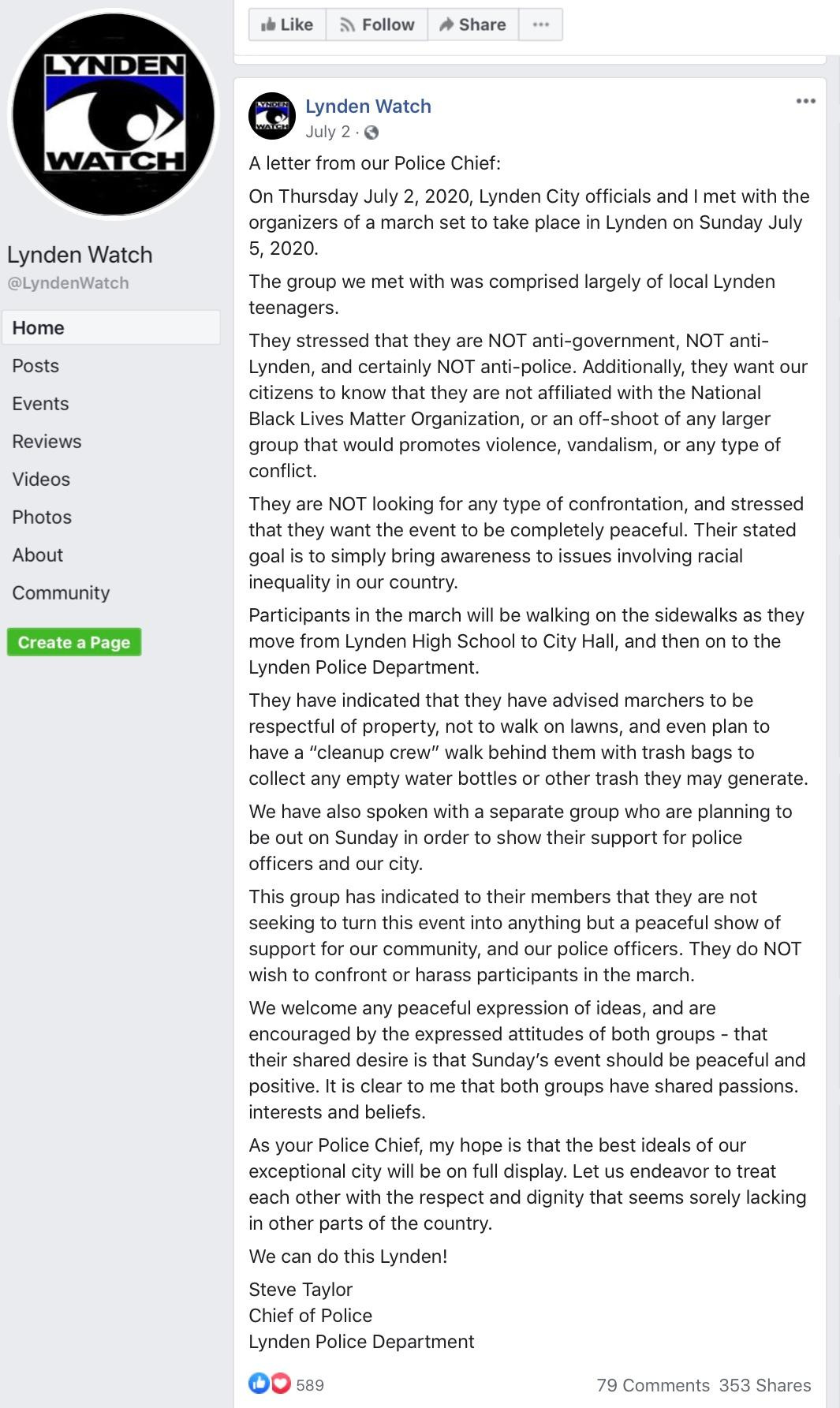
But it was not simply a misunderstanding. In fact, Lynden Police Chief Steve Taylor even posted on Lynden Watch (the counter-protestors’ Facebook page) an open letter confirming as much: “They stressed that they are NOT anti-government, NOT anti-Lynden, and certainly NOT anti-police. Additionally, they want our citizens to know that they are not affiliated with the National Black Lives Matter Organization…They are NOT looking for any type of confrontation, and stressed that they want the event to be completely peaceful. Their stated goal is to simply bring awareness to issues involving racial inequality in our country.”
I saw the film twice this past summer, first in August and again in September. The first screening, at Lynden’s middle school, featured a question-and-answer session with the film makers, Bryan Tucker and Chris Baron, a representative from Racial Unity Now (more on that organization later), Amsa herself (now a student at Howard University), and videographer Wylin Tjoelker, a vocal Christian Nationalist and MAGA supporter who attends political rallies recording and publicizing the “conservative movement” on his YouTube channel. As told in the film, Amsa’s story is compelling but the Q&A that followed was even more illuminating, and uncomfortable. Perhaps, though, it wasn’t only the panelist’s words I was reacting to as much as it was my own feelings of anger, guilt, and uncertainty that brought up my uneasiness.
A Facebook livestream (some of which has been incorporated into LYNDEN) documents the day’s tension and how things could have gone tragically wrong. Thankfully, the Marchers and the counter-protesters literally stayed in their lanes (for the most part) on opposite sides of the street. The Q&A session at the screening four years after the march showed that feelings were still raw, though.
The audience, though a mostly white and older demographic, seemed largely sympathetic to LYNDEN’s message, which the panelists echoed during their eloquent comments. Each speaker gave their personal impressions of the film recounting the events of that day, but it was Tjoelker whose comments sparked pushback. After insisting that faith in Jesus, and only that faith, is the answer to achieving racial harmony several in the audience responded directly to him.
Christian Nationalism, indeed any dogmatic religious doctrine, reinforces the notion of exclusion, that outsiders are less than, their beliefs illegitimate, and are therefore to be shunned. At least two audience members, both people of color, noted that indigenous people, Muslims, Jews, or anyone who doesn’t share his faith would rightly be offended by Tjoelker’s comments. But instead of hearing and validating their viewpoints, he merely restated his position refusing to acknowledge that other belief systems exist, much less that they have value.
Much has been written about how divided the U.S. has become, but there has always been a schism in our country. Merely pick the metrics: rich vs. poor; Black vs. White; immigrant vs. citizen; believers vs. non-believers; Democrat vs. Republican, etc. to understand that when we slice and dice our communities into us versus them, foment fear and exclusion, we degrade our democracy. And as portrayed in LYNDEN, we continue to talk past each other. Certain individuals and politicians amplify those misunderstandings, exploiting them for their own gain as if they don’t even want that conversation to happen.
The story of Lynden is more than just about the film and the town. It is a microcosm of the nation, how we’ve devolved into an inability to talk to each other. If small town high school students can’t plan a march to celebrate diversity and encourage dialogue and instead met with hostility and threats, how can we as a nation encourage vigorous and respectful debate to reach solutions to the most vexing problems our nation faces?
“Apparently other people’s lives don’t matter, just Black lives. In Lynden we don’t use the words white or black. We just refer to everybody as Americans. That’s because we are not racists. The fact of the matter is whenever color is introduced in the conversation for whatever reason that’s kind of racist. It really is.” (Wylin Tjoelker)
Tjolkier’s words echo what has been said repeatedly in reaction to the work of Black Lives Matter over the last 10 years, a willful misinterpretation of BLM’s intent and goals. In response to this rhetoric, Racial Unity Now (RUN) was organized by a group of local Chrisitan leaders in Lynden, to move past mis/dis information, encourage meaningful dialogue, and bridge racial divides.
Though RUN formed to be community peacemakers, build understanding across racial lines, and promote racial reconciliation, its work may, sadly, be in vain.
A day before the July 5th March for Black Lives, “Keith” posted the following comment on Facebook: “I’m sick of these blm protesters. Come to Lynden causing trouble mabey [sic] the kkk should meet them main street has a lot of tall trees along the way good hanging trees.”
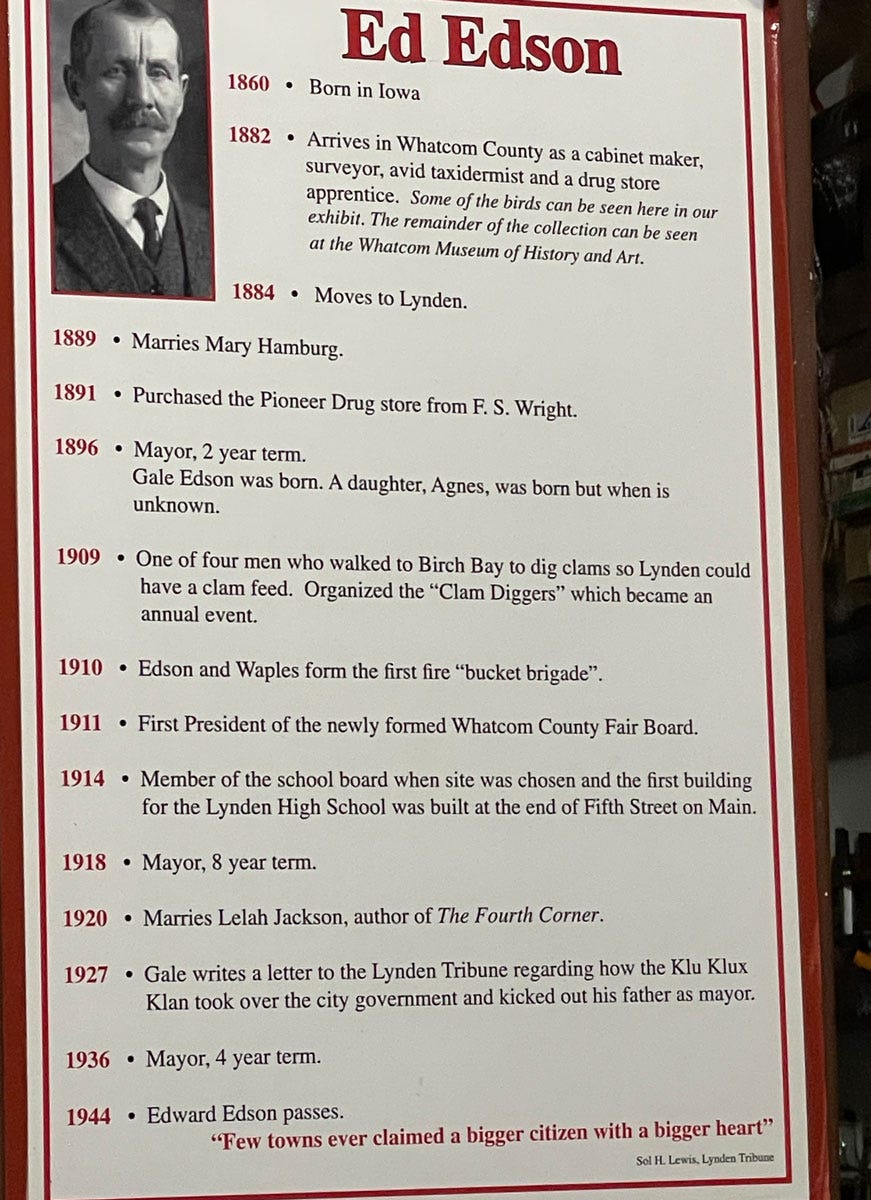
Our country’s legacy includes the ugly specter of white supremacy. Attempts to rid ourselves of that divisive stain goes back centuries and appears, often times, that it will be a never-ending struggle. In 1927, white supremacy made its appearance in Lynden. On November 5, 2024, white supremacy triumphed in the United States once again, prompting the question, will we ever be a perfect union?
As I’ve further reflected on LYNDEN’s message and our country’s tragic legacy of bigotry, racism, and white supremacy, I still hold out hope. The real story here is that despite what could have turned into a disastrous and horrific tragedy, the 2020 Lynden March for Black Lives did result in a continuing dialogue. At the Q&A session after the screening in August, I heard Lynden religious leaders acknowledge they failed the community when gun-toting protesters brandished their weapons on church property. But today, participating in community-wide discussion, working with Racial Unity Now, and acknowledging past missteps, Lynden’s community leaders and citizens continue to grapple, peacefully, with its past and look toward a just future. And all because a young Black woman had the innocence and courage to believe she could stand up and demand justice.
“Never doubt that a small group of thoughtful, committed citizens can change the world. Indeed, it is the only thing that ever has.” (Margaret Mead)
(All photographs @Mark Caicedo/PuraVida Photography except where noted)