

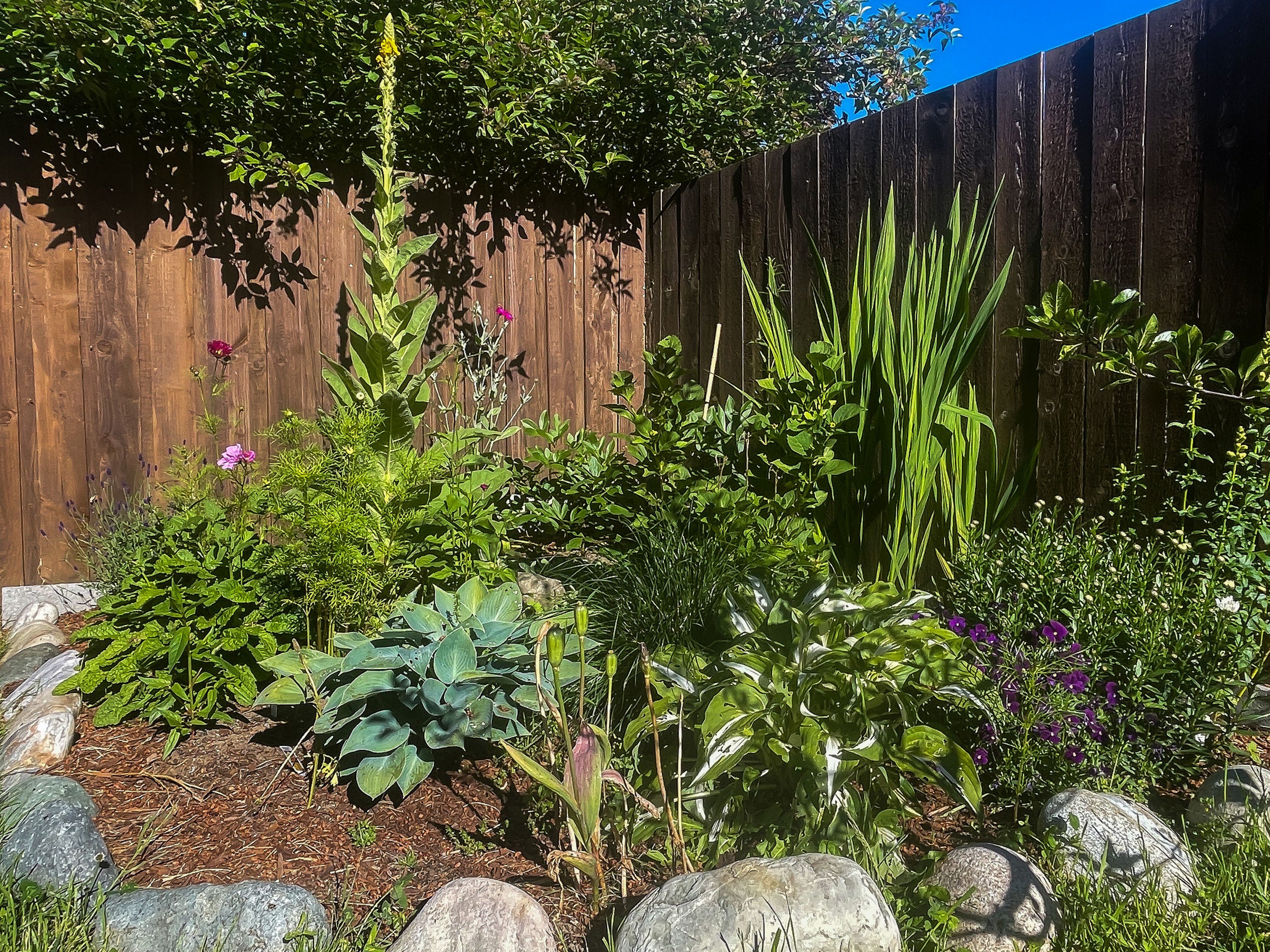
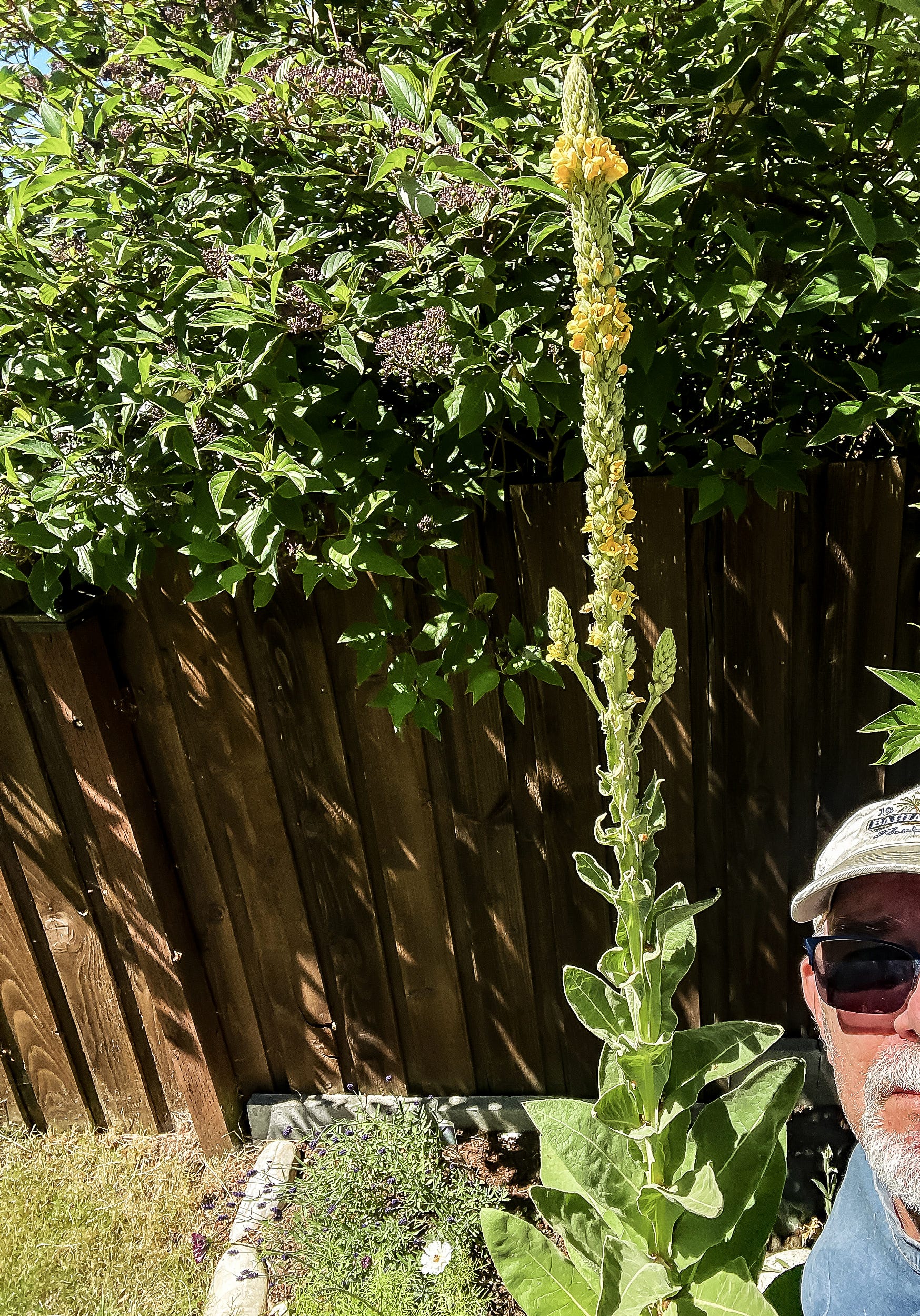
It is anything but common, this impressive plant that materialized in a bare, uncrowded spot of the pollinator garden this spring. The Common mullein (verbascum thapsus) is what The Laidback Gardener calls a “useful weed,” But our backyard so-called pest is a beautiful volunteer, bursting forth in spasms of color, staking out its own territory.
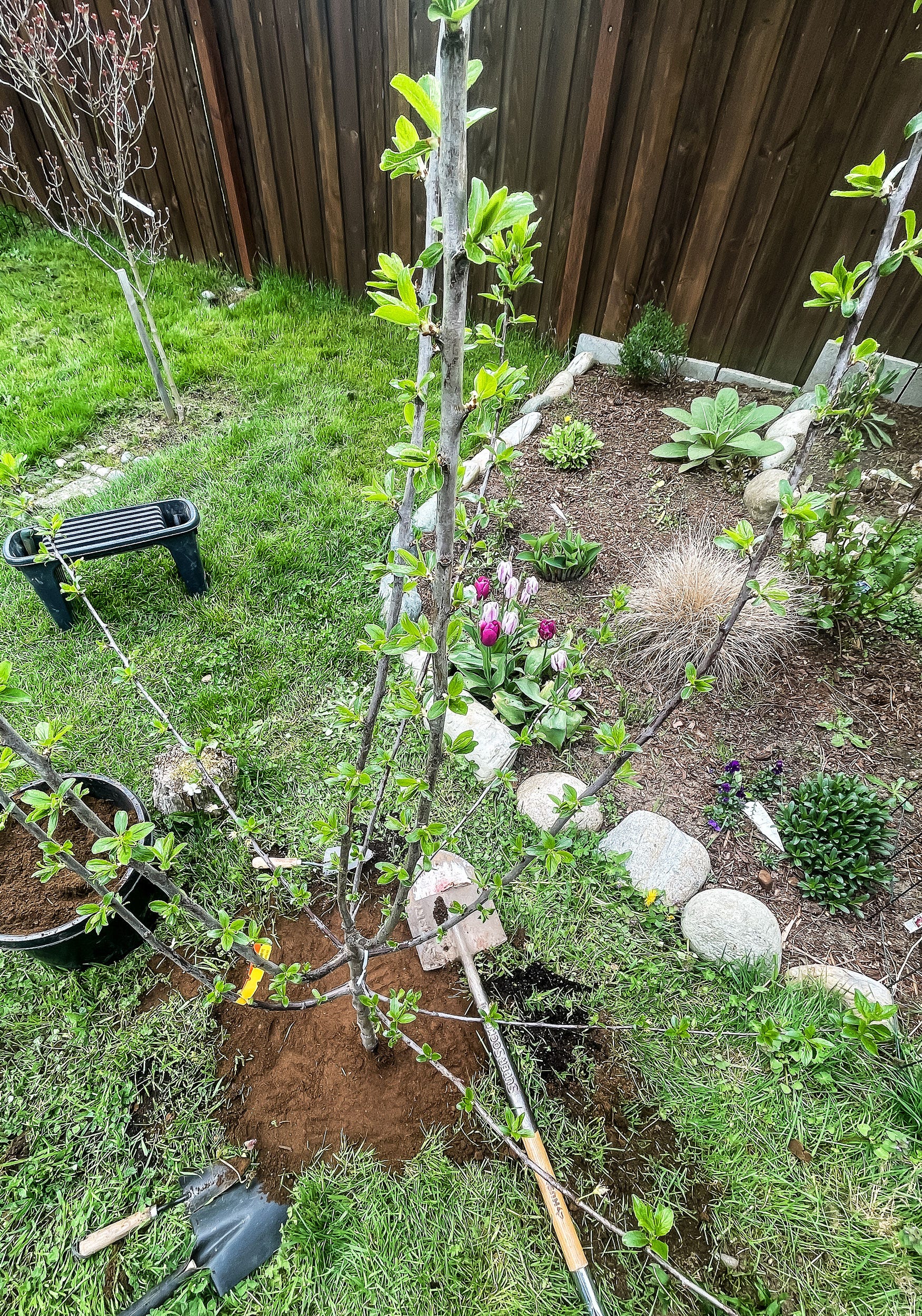
After cycling through several variations of “when did we plant this one?” and “should we pull it out?” out of curiosity we simply decided to let it grow. Several google searches later revealed the nature of this rapidly growing shrub. As it turns out, some regard it as a weed, but others think of it as a survivor, unique, striking, and useful.
But whoever heard of an unwanted interloper as beneficial?
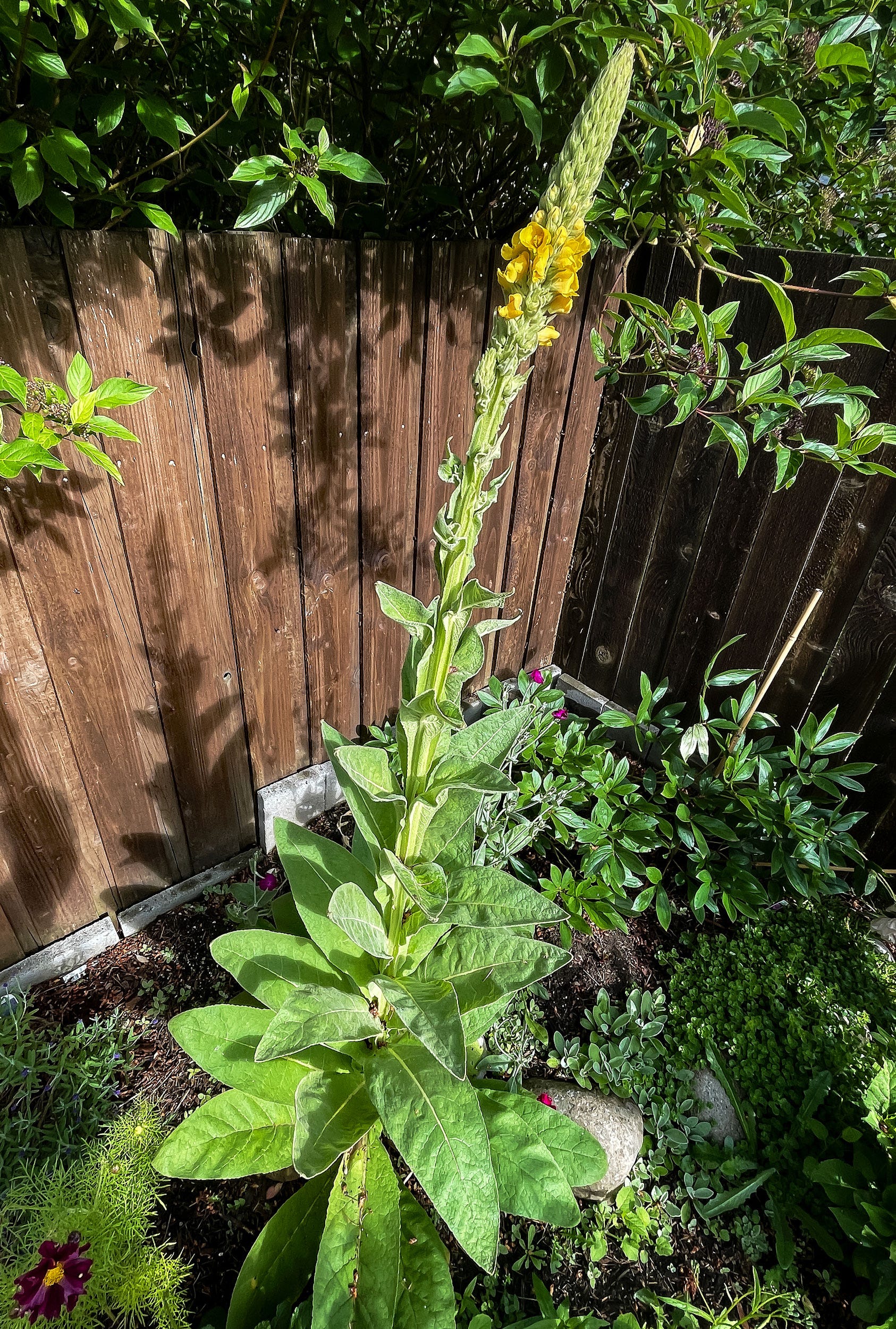
The eight foot ornamental (so regarded by the Laidback Gardner) is astounding to see but it also serves many useful purposes: mullein oil tinctures can be used to treat warts, boils, and hemorrhoids; powdered mullein root can help alleviate rashes, sores, and skin infections. Even teas and other drinks brewed from mullein leaves have medicinal roles. The common mullein’s many uses are reflected in its variety of names, as well: Aaron’s Rod, candlewick plant, flannel plant, flannel leaf, great mullein, miner’s candle, shepherd’s staff, torch plant, velvet dock, and finally, “cowboy toilet paper” (use your imagination or better, don’t).
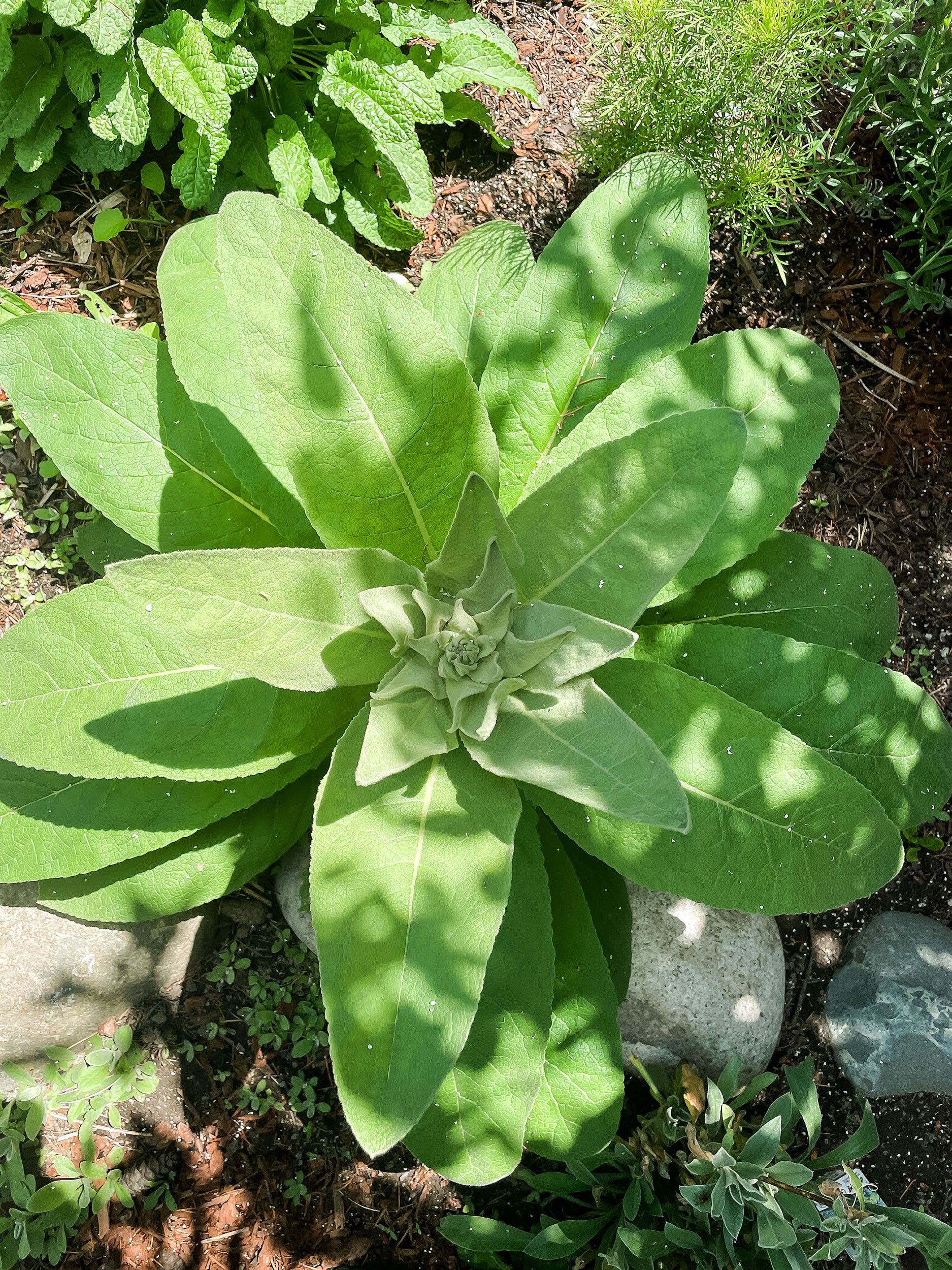
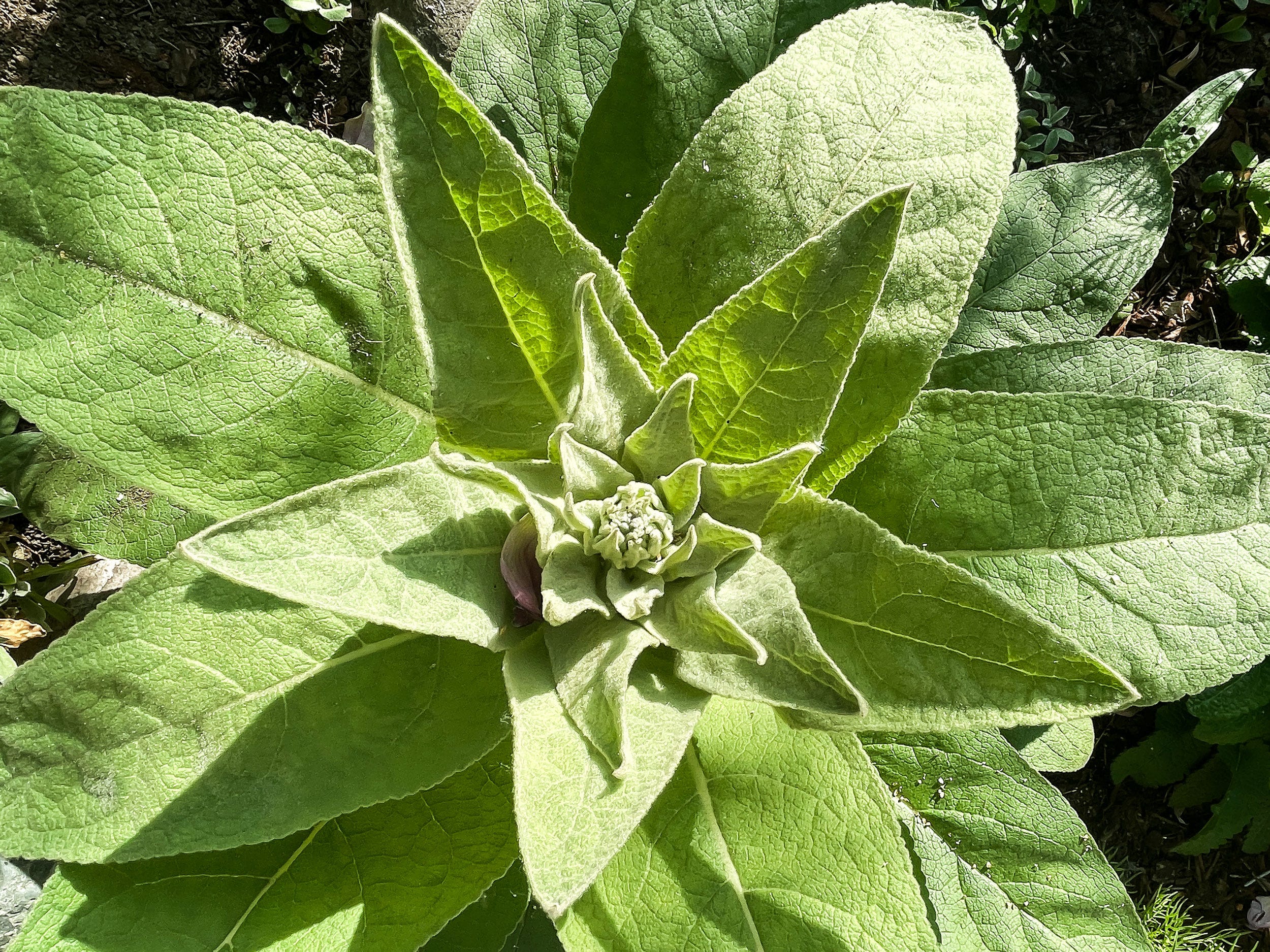
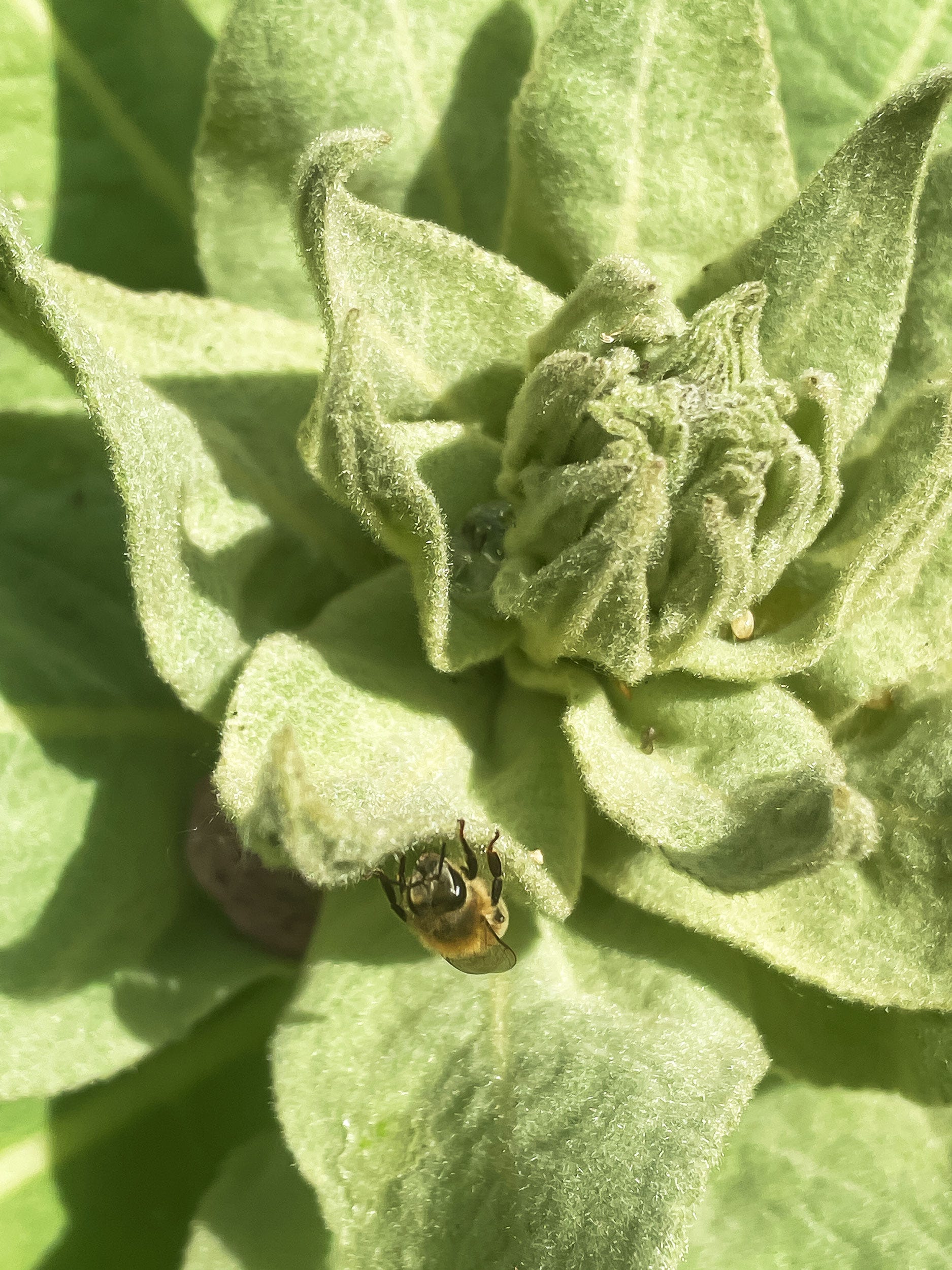
Our Common mullein began as a rosette, a very large rosette. As we watched the pollinator garden slowly recover from winter’s torpor and spring’s colors began to show, a strange and unknown plant showed up on the garden’s fringes. We have a light touch when it comes to garden management, preferring to watch nature take shape rather than chop away at the weeds and undergrowth. This time, though, that light touch resulted in an impressive, robust fixture asserting its dominance over that corner of the yard. Now, after only three months, it tops eight feet, its broad, velvety leaves small canopies for a host of critters under which to hide, its flower stalk swelling with hundreds of bright yellow blooms.
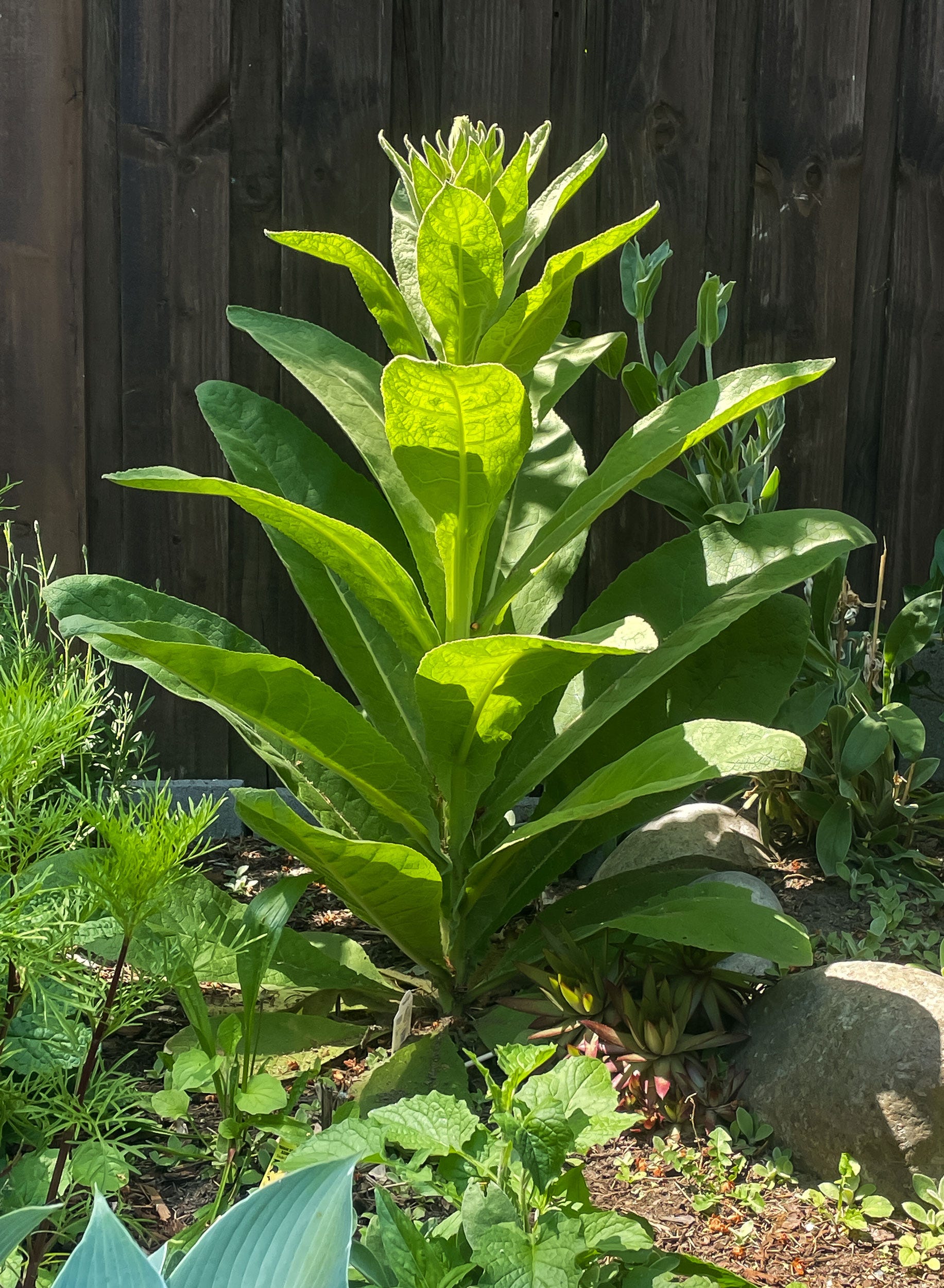
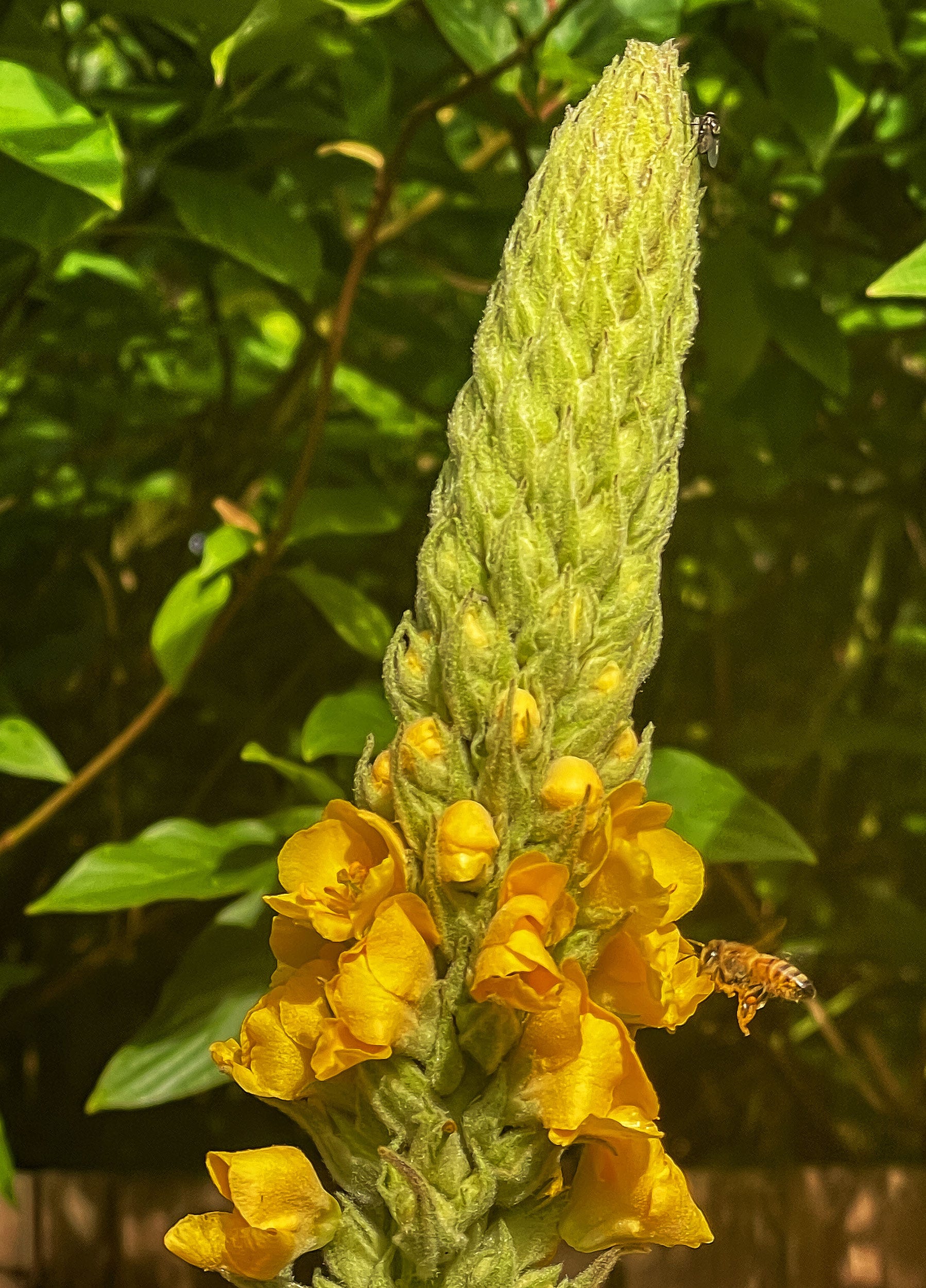
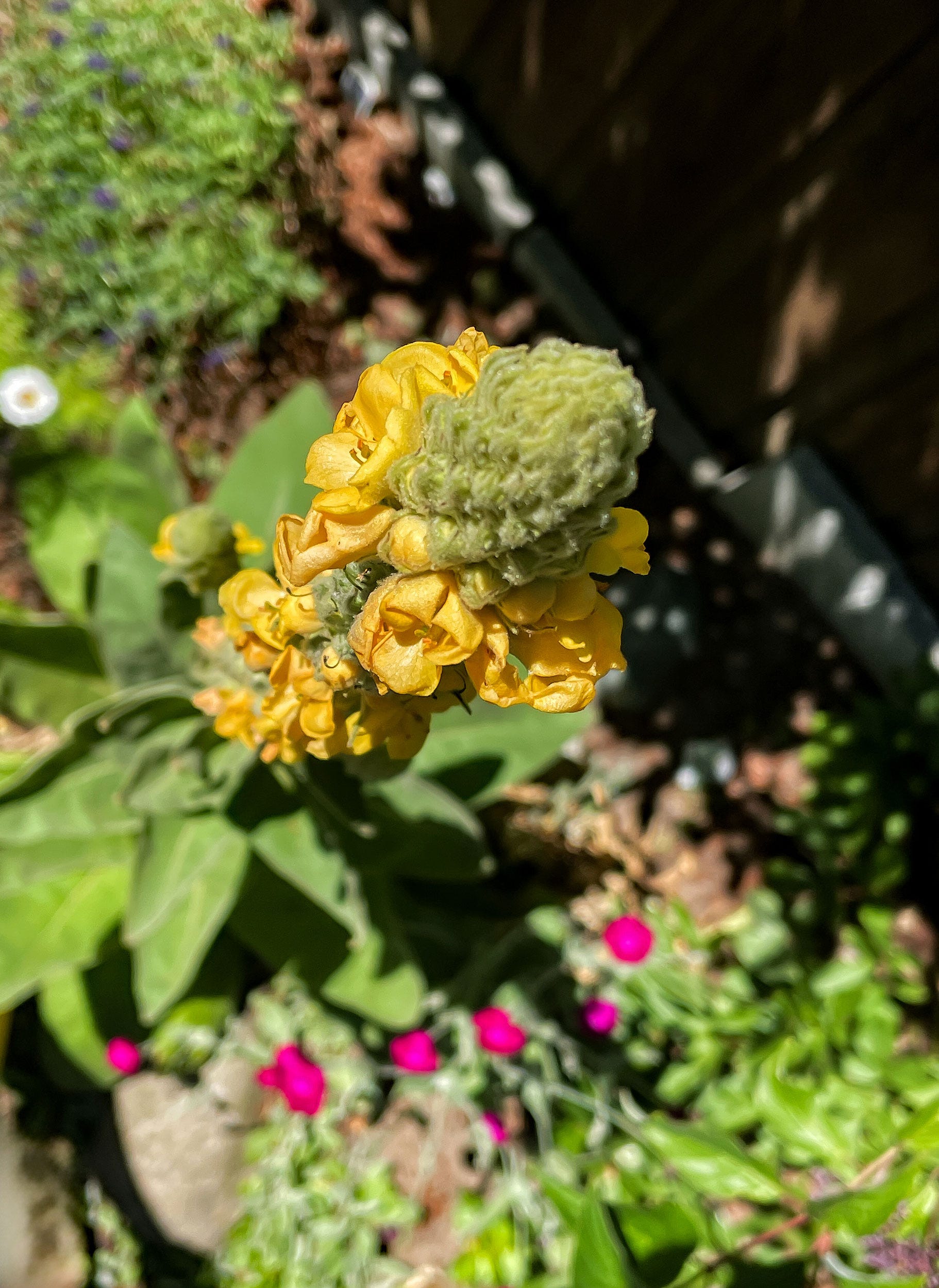
Common mullein is a biennial stealth weed producing a thick, sessile, downy rosette with soft and fuzzy leaves reaching 20 inches long. The second year (similar to the maguey, though they are unrelated) a thick straight stalk normally reaching 3 to 6 feet grows from the rosette’s center. Crowning the stalk is a mass of 5-petaled charmingly scented yellow flowers that eventually become seed cases producing up to 240,000 seeds per plant that can lay dormant for over a century.
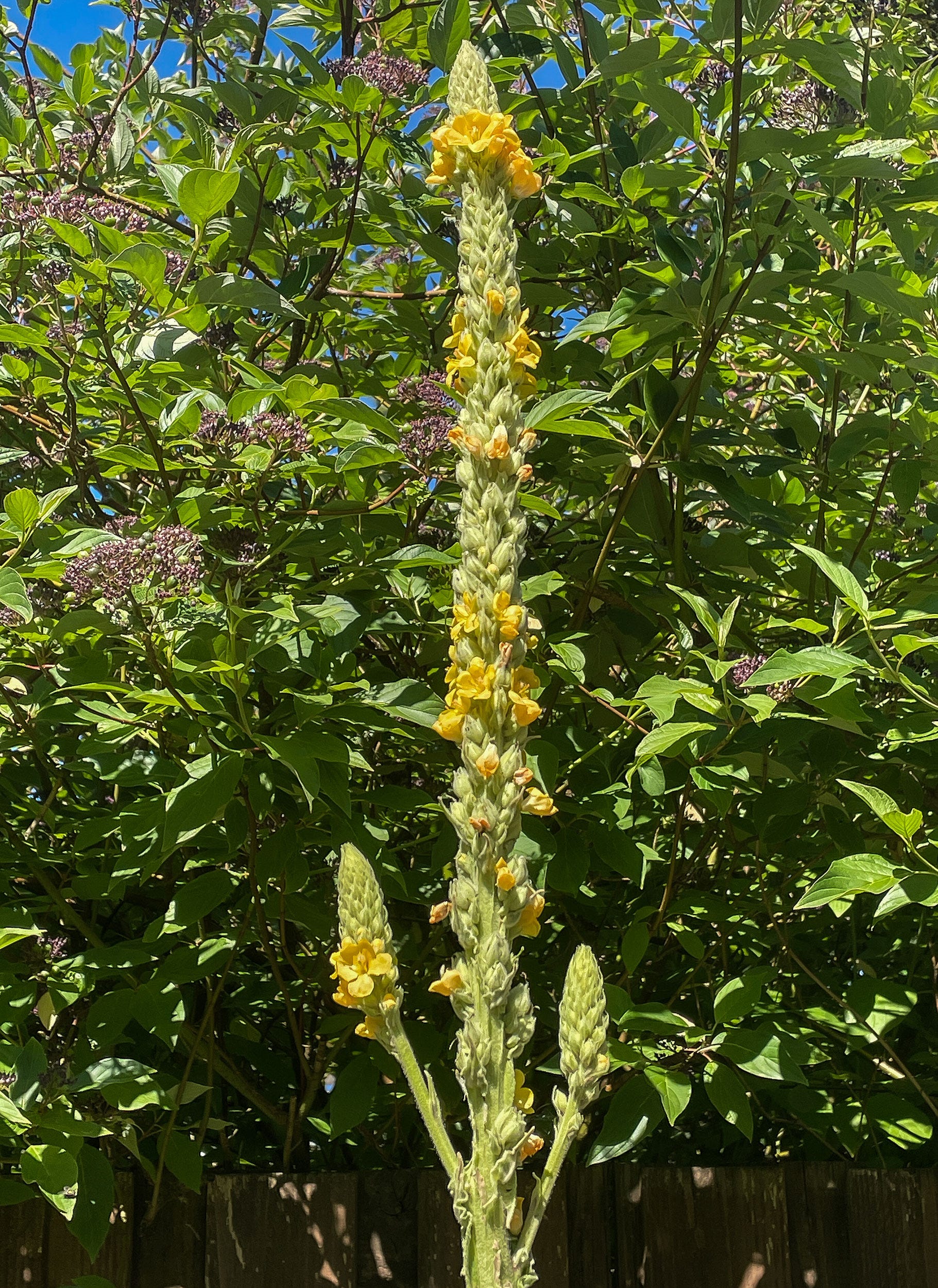
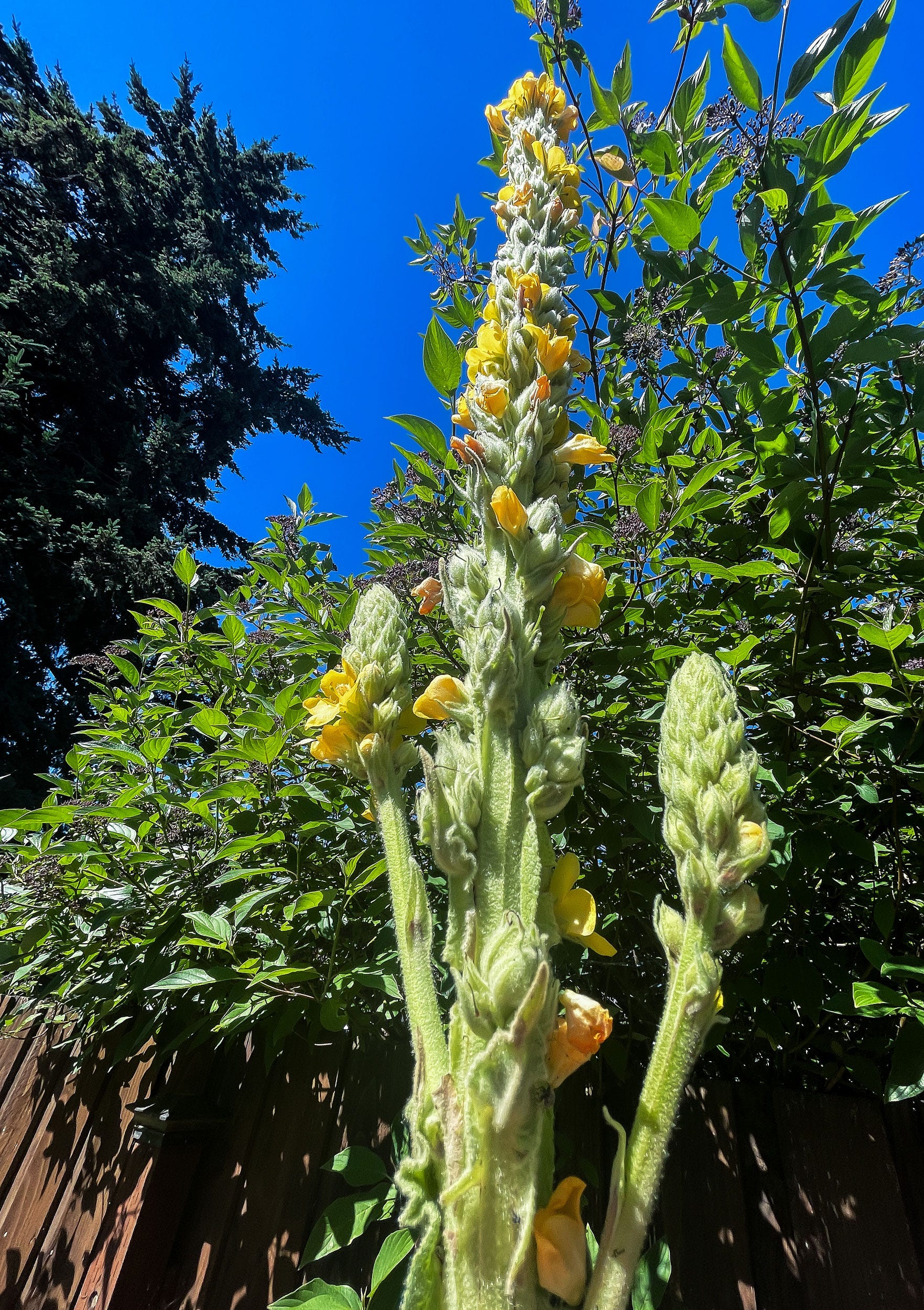
And then, after two years it dies. But another mullein will randomly reappear when conditions are optimal. Such is the way with mullein!
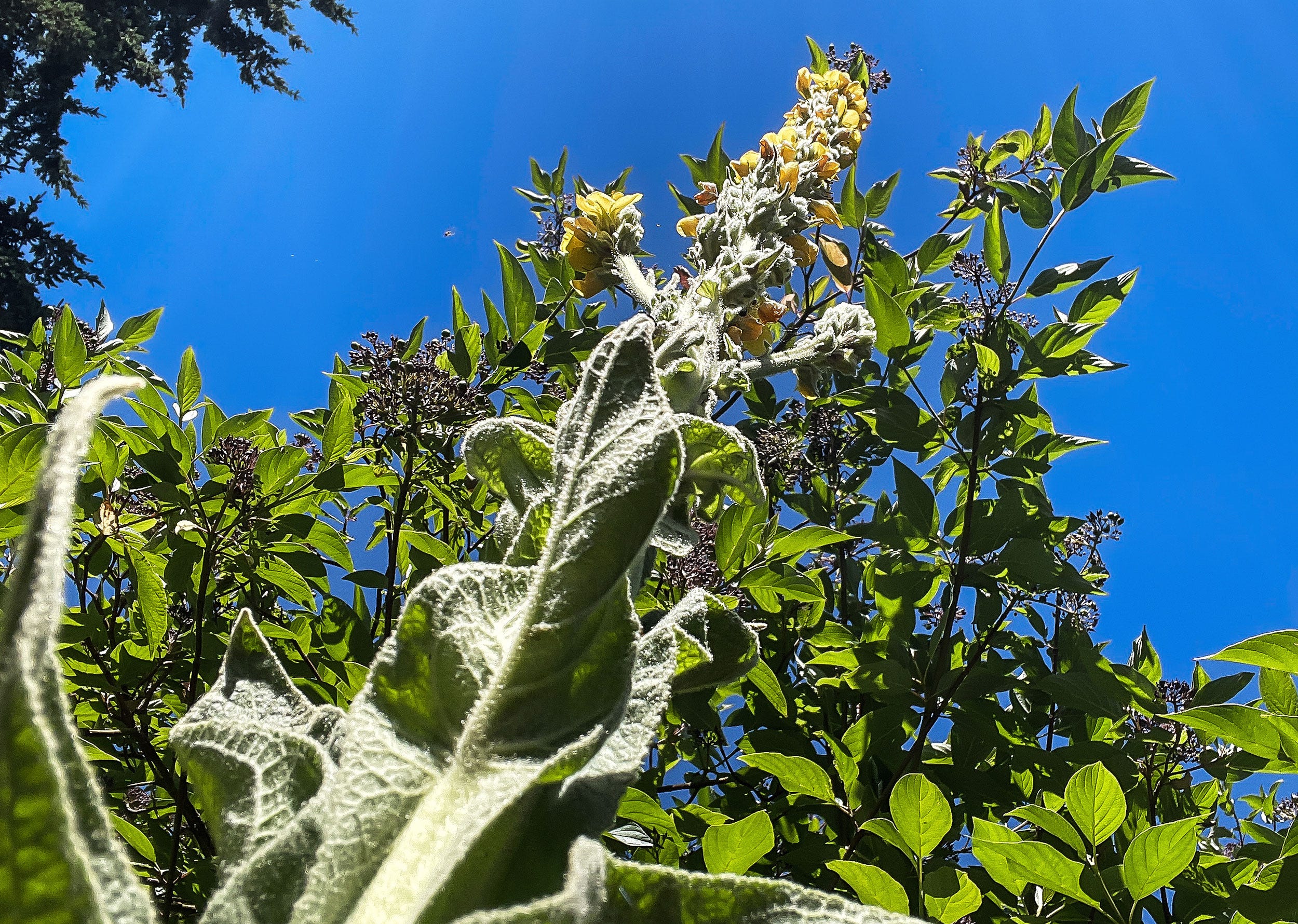
Originally native to Eurasia and North Africa, it now found throughout the world, equally at home in sub-tropical and temperate climates. Though many do despise it, common mullein is nonetheless a stunning and extraordinary plant, a wildflower like no other, a beautiful “pest” now adorning our pollinator garden.
(All photographs copyright Mark Caicedo/PuraVida Photography)